Best Shipping Envelopes for Secure and Affordable Delivery?
When it comes to shipping products, choosing the right Shipping Envelopes can make all the difference. A sturdy envelope not only protects items but also ensures they reach customers safely. The market offers various options, ranging from padded to flat envelopes. Each type has its unique benefits, but the challenge lies in finding the best fit for your needs.
Affordable delivery is crucial for small businesses. However, many overlook the impact of envelope selection on overall shipping costs. A flimsy envelope can lead to damage and returns, ultimately increasing expenses. On the other hand, investing in quality Shipping Envelopes may initially seem daunting. Yet, it can save money in the long run.
While many brands advertise their envelopes as the best, not all deliver on their promises. It's essential to assess features like durability, size, and price when making a choice. The process can be overwhelming, and mistakes are common. Yet, understanding the options available can lead to better decisions. Truly, choosing the right Shipping Envelopes is both an art and a science.
Types of Shipping Envelopes for Various Needs
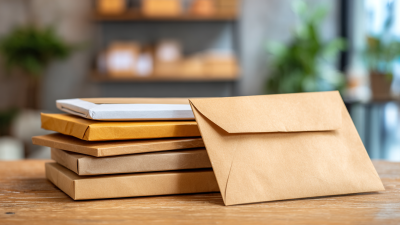
When selecting shipping envelopes, consider your specific needs. Different types serve unique purposes.
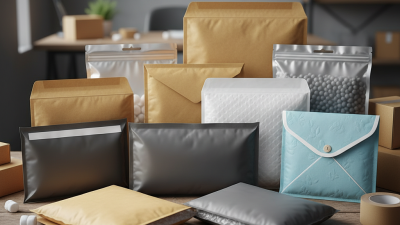
Bubble mailers are great for fragile items. They provide cushioning and protection.
Flat, sturdy envelopes work well for documents. Use them for contracts or important letters.
Tips: Always choose the right size. An envelope that's too large may allow shifting. This could cause damage. One that’s too small might result in bending.
Think about the weight, too. Heavier items need stronger materials.
For environmentally conscious shipping, look at recyclable options. Some envelopes now offer a biodegradable choice. These are not only secure but also good for the planet. A few envelopes come with self-sealing features. It saves time and ensures items stay secure.
Remember to check for any damage before sealing the envelopes. A small tear can mean trouble later on.
Cost-Effective Options for Affordable Shipping Solutions
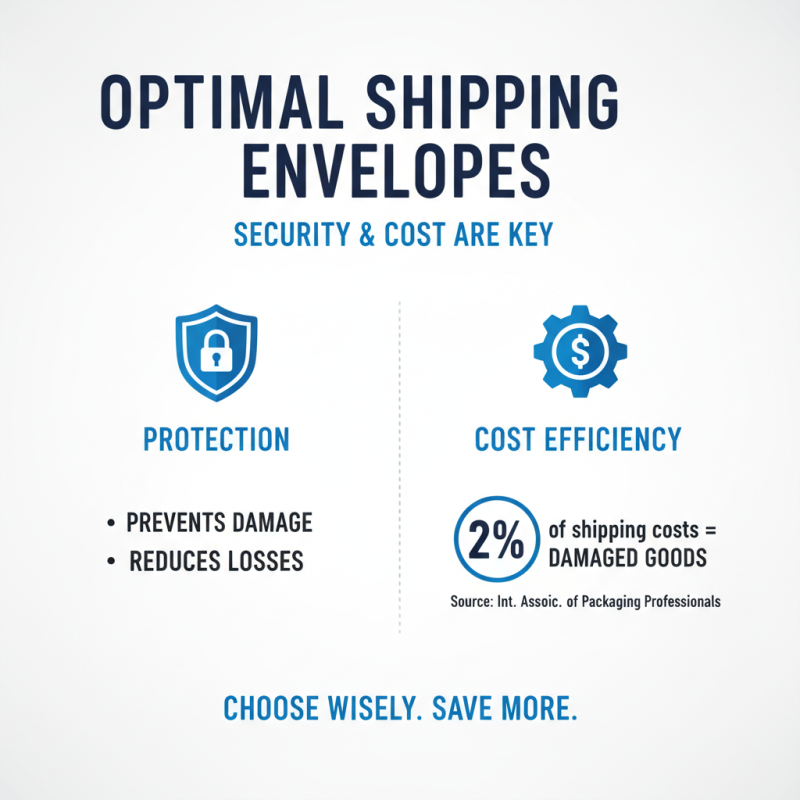
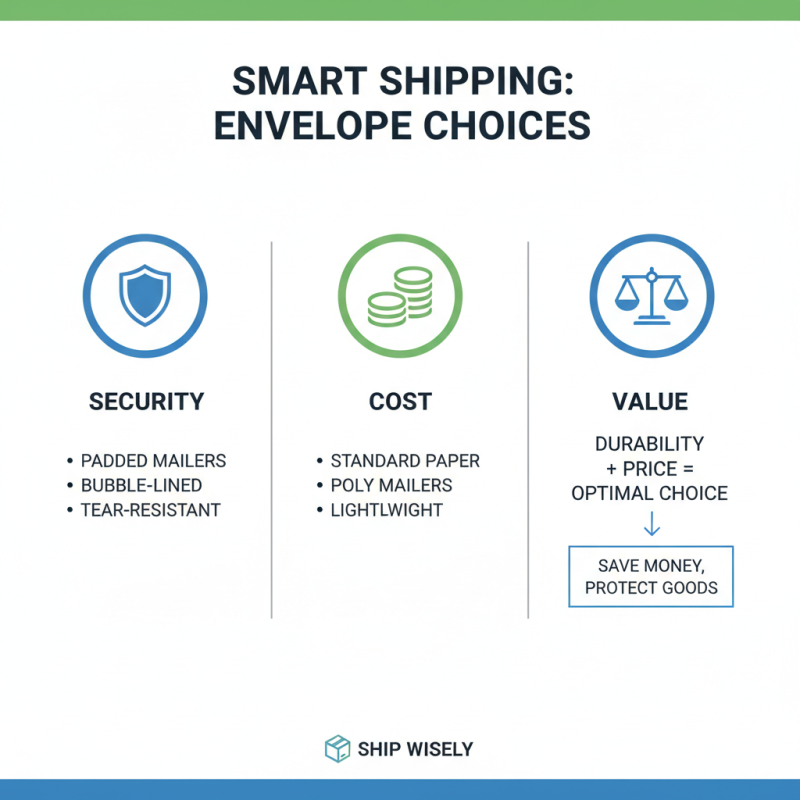
When it comes to shipping items securely and affordably, the choice of envelopes matters greatly. Many options are available, but not all provide good value for your money. A sturdy envelope can protect contents during transit. Yet, many forget to consider the shipping cost. Finding the balance between security and cost is crucial.
Bubble mailers are a popular choice. They provide cushioning and protection against damage. However, they can be pricier than regular envelopes. On the other hand, flat shipping envelopes are lightweight, which can save on postage. The trade-off? They may not offer the same level of protection. It's important to evaluate the contents being shipped. Are they fragile? If so, a more robust option might be necessary despite added costs.
Careful selection can prevent losses. Some might find cheaper envelopes that lack durability. In the long run, this can lead to damaged items and unhappy recipients. Keep in mind the importance of weighing options. Always consider the potential for refunds or replacements when evaluating envelope choices. Sometimes, the cheapest option is not the wisest.
Features That Enhance Security in Shipping Envelopes
When choosing shipping envelopes, security is paramount. The right envelope can prevent damage and theft during transit. According to industry reports, nearly 20% of packages are lost or damaged during delivery. This makes the selection of secure envelopes essential for both businesses and individuals.
Features that enhance security include padded cushioning and tamper-evident seals. Padded envelopes protect contents from impact, reducing the risk of damage. Tamper-evident seals provide visual evidence if an envelope has been opened. These elements contribute to the overall integrity of your package. Additionally, some envelopes come with water-resistant properties. This is important for protecting documents or items that can't be dampened.
Tips for choosing the best envelope: Always consider the size of your contents. An envelope that's too large may allow movement, increasing the risk of damage. Also, check the weight limit of the envelope. Overloading it can lead to unintended tears. Evaluate the shipping method as well; some require specific materials for maximum security. Remember, the best choices often reflect a balance of cost and protection.
Best Shipping Envelopes for Secure and Affordable Delivery? - Features That Enhance Security in Shipping Envelopes
| Envelope Type |
Material |
Security Features |
Affordability |
Weight Capacity |
| Padded Envelopes |
Polyethylene |
Tear-resistant, padded lining |
$0.50 - $1.50 each |
Up to 2 lbs |
| Bubble Mailers |
Paper and Bubble Wrap |
Water-resistant, shock absorbent |
$0.70 - $2.00 each |
Up to 5 lbs |
| Security Envelopes |
Opaque Paper |
Tamper-evident, secure adhesive |
$0.30 - $0.80 each |
Up to 1 lb |
| Kraft Mailers |
Recycled Paper |
Self-sealing, biodegradable |
$0.25 - $0.60 each |
Up to 3 lbs |
| Poly Mailers |
Plastic |
Waterproof, tear-resistant |
$0.20 - $0.70 each |
Up to 5 lbs |
Environmental Considerations in Shipping Envelope Selection
When choosing shipping envelopes, environmental considerations play a crucial role. Many envelopes are made from plastic or other non-biodegradable materials. This contributes to landfill waste and pollution. Selecting recyclable options can significantly reduce environmental impact. Paper envelopes, for example, are often more eco-friendly. However, they may not always provide the same protection as their plastic counterparts.
Another aspect to consider is the envelope’s production process. Some manufacturers use sustainable practices, while others do not. It's essential to research the sourcing of materials used in envelopes. This can be a challenge, as transparency isn’t always available. Consumers should seek envelopes that are certified by recognized environmental organizations. Ideally, these choices can lead to more sustainable shipping practices.
Weight matters as well. Lighter envelopes reduce shipping costs and carbon footprint. A balance between durability and weight is needed. Thinner envelopes may get damaged during transit, leading to extra packaging, which negates eco-friendly benefits. Opting for heavier, sturdier envelopes might seem practical, but they could harm the environment. Reflecting on these trade-offs is vital for responsible decision-making.