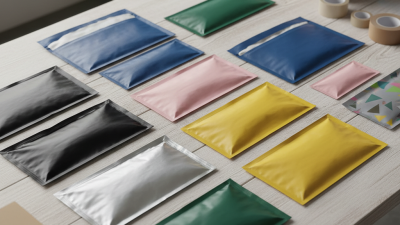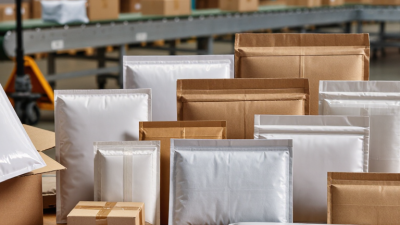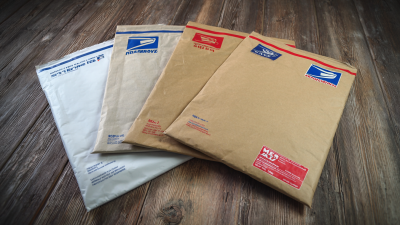

Global buyers need more than attractive packaging samples when selecting a reliable Chinese poly mailer supplier. This guide explores China’s top 10 Poly Mailer manufacturers through practical purchasing criteria, including material quality, printing accuracy, production capacity, minimum order quantities, and export experience. The keyword “Ploy Mailer” is often searched by buyers, although Poly Mailer is the standard industry spelling.
A dependable manufacturer should provide clear film specifications, sealing performance data, and consistent sample quality. Buyers should inspect recycled content claims, adhesive strength, tear resistance, and color stability. Factory videos can help, but physical samples reveal more. Ask for recent production photos, packaging details, and realistic lead times. A polished website alone proves little.
Small details matter. Does the supplier label cartons correctly? Can it repeat a custom size without variation? Does its sales team explain limitations honestly? These questions separate experienced manufacturers from simple trading contacts. The selected companies should demonstrate professional communication, traceable production processes, and a record of serving international customers. Certifications may support credibility, but buyers should verify their validity and scope.
This is not an absolute ranking. Manufacturing conditions change, and public information can remain incomplete. A supplier with excellent prices may still struggle with peak-season capacity or quality control. Buyers should compare samples, audit documents, payment terms, and after-sales support before committing. Careful verification takes time. It often prevents expensive surprises.
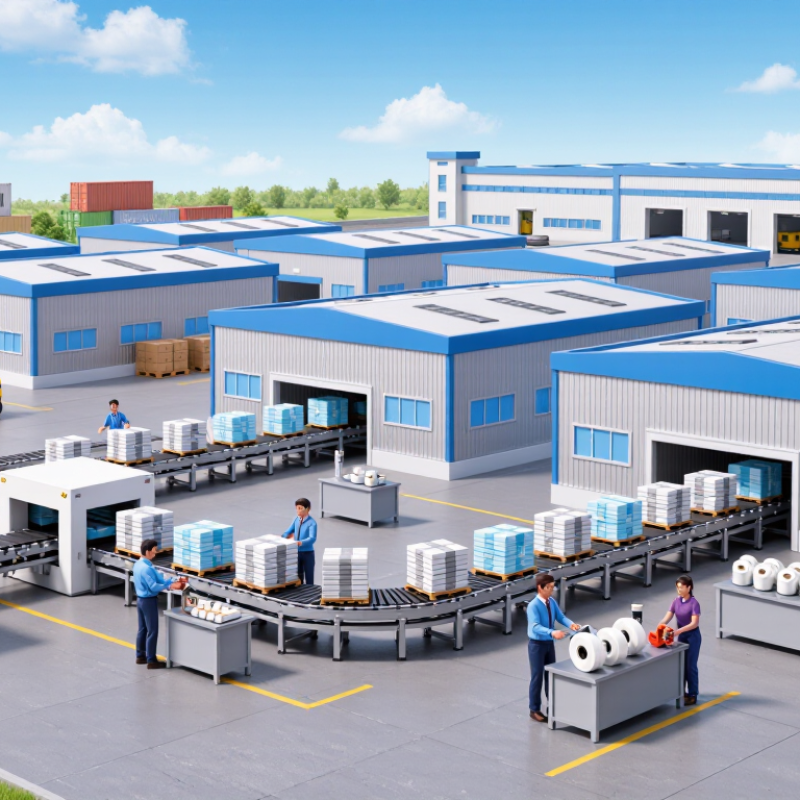
China’s parcel economy creates enormous demand for protective, lightweight shipping packaging. According to the State Post Bureau’s 2023 Statistical Bulletin, China handled 132.07 billion express parcels and generated more than RMB 1.2 trillion in express delivery revenue. Every shipment may require a mailer that resists tearing, moisture, and rough sorting conditions.
This scale influences how global buyers evaluate poly mailer manufacturers. Production capacity matters, but it should not be the only measure. Buyers should review film thickness, seal strength, recycled content, printing consistency, and batch inspection records. The China Packaging Federation’s industry analyses also highlight packaging efficiency and material reduction as continuing priorities. A thinner mailer can reduce transport weight, yet poor film quality may cause waste and customer complaints.
Practical testing remains essential. Ask for samples, measure the actual thickness, and test adhesive closure after storage. Some suppliers provide attractive samples but inconsistent bulk production. That weakness is easy to overlook. Buyers should also request factory audit documents and verify quality-control procedures against recognized packaging standards. Poly mailers are simple products, but reliable performance depends on disciplined manufacturing, not impressive catalog images.
For global buyers, poly mailer selection starts with polymer chemistry, not color or price. LDPE offers soft handling, strong impact resistance, and reliable heat sealing. HDPE feels stiffer and provides higher tensile strength, but it can feel noisier and less flexible. In factory trials, I check film thickness, tear resistance, seal strength, and closure performance. A thin mailer may save material. It may also fail at a sharp carton corner.
Material claims need careful reading. ISO 18606 addresses packaging designed for organic recycling, including industrial composting conditions. ASTM D6400 specifies requirements for plastics intended for municipal or commercial composting facilities. Neither standard makes every poly mailer compostable automatically. Conventional LDPE and HDPE usually require mechanical recycling systems instead. The 2023 OECD Global Plastics Outlook reported that only 9% of plastic waste was recycled globally. That figure makes disposal instructions more than a marketing detail.
Procurement teams should request resin identification, test reports, thickness tolerances, and certificates linked to the actual product structure. The Sustainable Packaging Coalition has repeatedly emphasized that infrastructure determines whether packaging performs sustainably. A compostable mailer can still fail when local composting facilities cannot process it. I have seen specifications that looked complete but omitted adhesive and ink details. That gap deserves scrutiny. Standards help, but real-world collection remains the harder test.
China’s top ten poly mailer manufacturers should be ranked by verified performance, not factory photographs. The strongest suppliers usually accept MOQs from 10,000 to 50,000 bags. Their monthly capacity may range from 5 million to 30 million pieces. However, capacity alone proves little. Buyers should inspect extrusion lines, printing equipment, and backup production plans.
Ranks one to three should show stable export shipments, documented batch testing, and ISO 9001 systems. Ranks four to six may offer stronger customization, including colored films, adhesive strips, and tear-resistant seals. Ranks seven to ten can suit smaller trials, with lower MOQs but less production depth. Quality checks should cover film thickness, seal strength, puncture resistance, color accuracy, and adhesive performance. Ask for recent inspection records, not only certificates. Certifications such as ISO 9001, GRS, or recycled-content documentation can support credibility, but their scope must match the actual product.
Export data adds useful evidence. Review shipment frequency, destination regions, declared product descriptions, and buyer references where available. A supplier shipping regularly to several markets may understand packing, labeling, and communication better. Still, customs data can be incomplete or delayed. No ranking is perfect. I would request a small paid sample order, compare measurements, and record defects before approving mass production.
China’s top ten poly mailer manufacturers serve a fast, specification-driven export market. China’s State Post Bureau recorded 132.07 billion parcels in 2023. That volume explains the focus on lightweight films, reliable seals, and automated packing. The Future of E-Commerce Packaging to 2029 reports continued growth in protective mailer demand, especially for online retail and cross-border fulfillment.
The leading Chinese suppliers usually offer co-extruded PE films, recycled-content options, tamper-evident closures, and custom printing. Buyers should compare film thickness, seal strength, tear resistance, and dimensional tolerance. A 60-micron mailer may suit clothing, while heavier goods need stronger construction. Samples matter more than catalogs.
Ask for test records.
Experienced factories can provide production samples, batch traceability, and inspection photos before shipment. Some support low-volume customization, while others remain stronger in high-volume orders. Export teams commonly handle carton optimization, moisture protection, and documentation for overseas warehouses. However, recycled content claims require verification. “Eco-friendly” is not a sufficient specification. The Global Plastic Policy Centre reports that packaging remains a major source of plastic waste, so buyers should examine material composition and disposal guidance. Manufacturing capacity can also fluctuate during peak seasons. That risk is easy to underestimate. Reliable sourcing depends on measurable standards, clear tolerances, and repeated pre-shipment checks.
An anonymized comparison of representative Chinese poly mailer manufacturing profiles, based on commonly published product specifications, export practices, and packaging-industry capabilities.
| Profile | Main Product Focus | Typical Material Options | Common Thickness Range | Customization Capability | Typical MOQ Range | Primary Export Markets | Key Strength | Buyer Suitability |
|---|---|---|---|---|---|---|---|---|
| Manufacturer Profile 01 | Standard self-sealing poly mailers, courier bags, and e-commerce shipping envelopes | Co-extruded polyethylene; virgin or recycled-content options | 50–120 microns | Custom sizes, adhesive strips, warning text, barcode areas, and one- to eight-color printing | 10,000–30,000 pieces per size or design | North America, Western Europe, Australia, and Southeast Asia | Balanced pricing and broad standard-size coverage | Online retailers, fulfillment companies, and general importers |
| Manufacturer Profile 02 | Custom printed mailing bags for apparel, footwear, and subscription-commerce packaging | LDPE/LLDPE film; white, gray, black, and translucent structures | 60–150 microns | Rotogravure or flexographic printing, tear notches, double adhesive strips, and custom flap shapes | 20,000–50,000 pieces per artwork | United States, Canada, the United Kingdom, Germany, France, and Italy | Strong print reproduction and retail-oriented presentation | Fashion sellers, promotional campaigns, and private-label packaging buyers |
| Manufacturer Profile 03 | Recycled-content and recyclable poly mailers for sustainability-focused shipping programs | Post-consumer recycled PE blends and recyclable mono-material PE | 60–100 microns | Recycled-content declarations, custom percentages, light-color printing, and documentation support | 30,000–80,000 pieces per specification | European Union, the United Kingdom, Japan, South Korea, and Australia | Material traceability and sustainability documentation | Brands with recycled-content targets or retailer packaging requirements |
| Manufacturer Profile 04 | Tamper-evident security mailers and confidential document envelopes | Multi-layer polyethylene with permanent security adhesive | 70–120 microns | Security patterns, serial numbering, opaque layers, barcode printing, and custom warning messages | 20,000–50,000 pieces per security design | North America, Europe, the Middle East, and Southeast Asia | Improved privacy protection and visible tamper evidence | Financial services, laboratories, government contractors, and logistics operators |
| Manufacturer Profile 05 | Bubble-lined poly mailers for cosmetics, accessories, electronics, and small fragile goods | Polyethylene outer film with PE bubble cushioning layer | 70–140 microns outer film; 2–6 mm cushioning layer | Custom dimensions, printed surfaces, adhesive options, and tear-open features | 10,000–30,000 pieces per size | United States, Europe, Australia, and the Gulf region | Lightweight cushioning without a separate carton | Small-product shippers seeking lower dimensional weight |
| Manufacturer Profile 06 | Heavy-duty mailing bags for industrial parts, tools, textiles, and warehouse transfers | High-strength LDPE/HDPE blends and reinforced co-extruded films | 90–180 microns | Reinforced seams, larger formats, handle openings, warning labels, and customized closures | 5,000–20,000 pieces per size | Middle East, Africa, South America, North America, and Europe | Higher puncture resistance and large-format production | Industrial distributors, 3PL companies, and export packers |
| Manufacturer Profile 07 | Small-batch custom poly mailers for emerging brands and test-market orders | Standard PE film with limited-color or digital-style custom printing options | 50–100 microns | Small-run artwork, mixed-size orders, simple logos, and standard stock colors | 3,000–10,000 pieces per design | North America, Europe, Australia, and online wholesale channels | Lower entry quantities and faster sampling cycles | Startups, boutique brands, seasonal campaigns, and pilot projects |
| Manufacturer Profile 08 | Premium matte-finish and soft-touch mailers for branded unboxing experiences | Matte PE film, laminated PE structures, and specialty surface finishes | 70–120 microns | Matte or gloss finish, spot effects, full-coverage printing, custom adhesive flaps, and inserts | 20,000–50,000 pieces per artwork | United States, Canada, the United Kingdom, France, Italy, and the UAE | Higher visual appeal and premium surface treatment | Beauty, fashion, lifestyle, and direct-to-consumer brands |
| Manufacturer Profile 09 | Large-volume standard mailers for marketplace sellers and fulfillment networks | Cost-efficient co-extruded PE with standard white, gray, or black film | 50–90 microns | Standard dimensions, stock colors, basic one- or two-color printing, and carton packing | 50,000–200,000 pieces per repeat specification | United States, Europe, Southeast Asia, and Latin America | High-volume output and competitive unit economics | High-frequency shippers, distributors, and fulfillment centers |
| Manufacturer Profile 10 | Specialty mailers combining return functionality, resealable closures, and multi-use packaging | Reinforced PE film with dual adhesive strips or resealable closure systems | 60–130 microns | Return strips, peel-and-seal closures, tear lines, printed instructions, and custom dimensions | 15,000–50,000 pieces per design | Europe, North America, Australia, Japan, and South Korea | Supports forward shipping and customer returns in one package | Apparel, footwear, rental services, and reverse-logistics programs |
| Buyer note: MOQ, thickness, recycled-content percentage, printing method, testing documents, lead time, and export compliance vary by order. Buyers should request a current technical data sheet, sample approval, material declaration, and pre-shipment quality inspection before placing a production order. | ||||||||
China Top 10 Poly Mailer Manufacturers for Global Buyers?
A supplier’s MOQ is only the starting point. Request prices at three volumes, such as 5,000, 20,000, and 100,000 bags. A low MOQ can hide higher unit costs or weaker material control. Ask whether recycled content changes the MOQ. It often does. Confirm production lead time separately from sampling, artwork approval, and shipping. The 2023 Pitney Bowes Parcel Shipping Index recorded about 161.8 billion parcels worldwide in 2022, showing why peak-season capacity deserves careful checking. Obtain a written production schedule, not a friendly promise.
Testing should match the mailer’s actual use. Request thickness records, tensile strength, tear resistance, seal strength, and dart-impact results. ASTM D882, D1922, D1709, and F88 provide useful testing references. Test reports must identify the exact film structure and production batch. A generic PDF proves little. I would request pre-shipment samples from the finished lot. Small details matter. Check seal wrinkles, odor, adhesive release, print rub, and dimensional tolerance.
Compliance requires traceable evidence. Ask for declarations covering restricted substances, recycled-content claims, packaging obligations, and destination-market rules. The European Chemicals Agency’s 2023 enforcement project found non-compliance in 18% of inspected products across several product groups, so paperwork deserves verification. Calculate landed cost using product, tooling, inspection, freight, insurance, duties, taxes, and expected rejects. The cheapest quote may lose after one damaged carton. I have seen buyers overlook currency movement. That assumption needs testing.
Common planning ranges used by global buyers for anonymous supplier screening. Values are market-reference benchmarks, not company-specific claims.
MOQ and lead time vary with size, thickness, printing, recycled content, and order complexity. Testing should cover dimensions, seal strength, tensile performance, thickness, print durability, and packaging safety. Landed cost must also include freight, duties, inspection, payment fees, and local delivery.