
FAQjuan

2026 Top Shipping Envelopes for Global Buyers?

Choosing the right Shipping Envelopes in 2026 means looking beyond price and appearance. Global buyers need packaging that fits the product, handles repeated movement, and arrives ready for the next step in fulfillment. A slim document mailer, a padded envelope, and a water-resistant poly mailer solve different problems. None is the best choice for every shipment.

This guide compares envelope types through practical buying criteria: material, dimensions, closure strength, cushioning, print options, and storage needs. It also considers how weight and package size may affect shipping costs, which vary by carrier and destination. Small details matter. A flap that lifts during handling or a mailer that leaves too much room can cause avoidable trouble. Specifications are useful, but they do not tell the whole story. Request samples and check them with representative products before placing a large order. That takes time, and it can feel like an extra step. Still, the real package in your hand may reveal what a product sheet misses. Buyers should also ask suppliers for clear material descriptions and consistent quality information, rather than relying on broad sustainability claims. The options ahead are intended to help teams compare confidently, not promise one universal winner. Your best envelope depends on what you ship, how it is packed, and the experience you want customers to have when it arrives.
2026 Top Shipping Envelopes for Global Buyers?

What Shipping Envelopes Are and How They Protect Parcels

A shipping envelope is a flexible outer package designed to hold documents or compact goods while shielding them during sorting and delivery. Common options include paper mailers, padded envelopes, and water-resistant plastic mailers. Their protection comes from more than the outer material: sealed edges, a secure closure, and a close fit help prevent contents from shifting or slipping out.

Scale makes that protection matter. Pitney Bowes’ 2023 Parcel Shipping Index reported about 161 billion parcels worldwide in 2022, with volume projected to reach 256 billion by 2027. An envelope may pass through many handling points.

161 billion
parcels worldwide in 2022

For a soft garment, a tear-resistant mailer can be enough; a small glass item needs cushioning and a sturdier outer pack. Press the sealed edge, check the corners, and gently shake the package. Movement is a warning.

Moisture resistance is useful, but it is not the same as waterproofing. Paper can soften when wet, while thin plastic may puncture against sharp edges. This is easy to overlook. For valuable or fragile contents, test a packed sample with realistic drops and compression, using procedures such as those described by ISTA. The right envelope reduces common risks; it cannot make every parcel damage-proof.

Main Types of Shipping Envelopes for Global Buyers

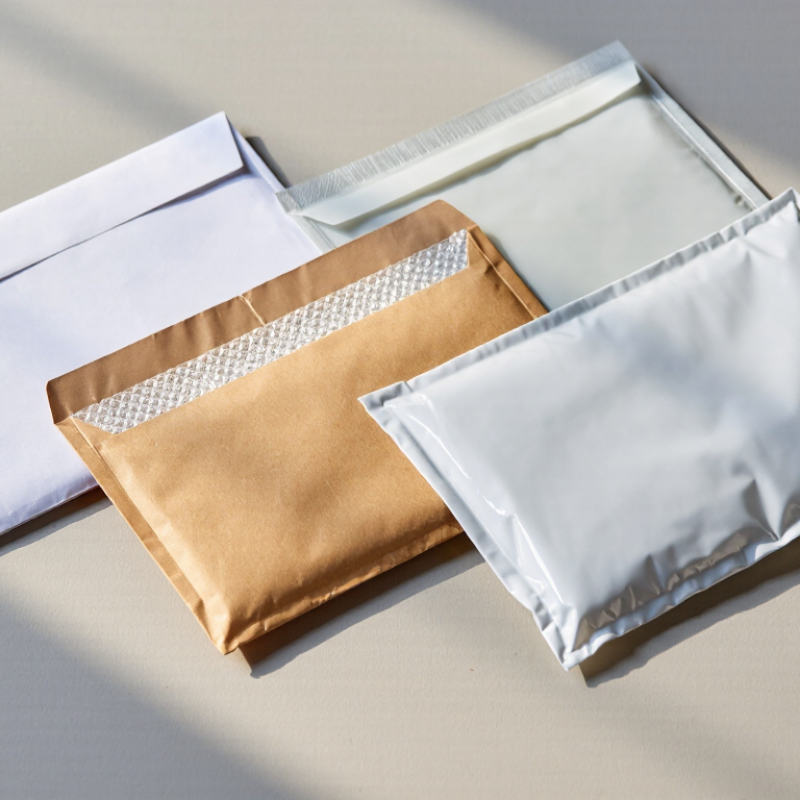
Shipping envelopes are not interchangeable. The right type depends on the item, its weight, and the journey it must withstand. Poly mailers are lightweight and water-resistant, making them practical for soft goods such as clothing. They take little storage space, but they offer limited protection against sharp edges or crushing. A folded garment may arrive neatly; a rigid object can puncture the same envelope.

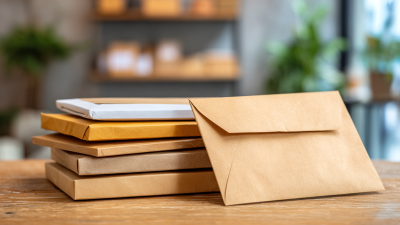
Padded mailers add a cushioning layer for small, breakable items. Paper versions feel sturdy and are easy to write on, while bubble-lined options can reduce impact damage. Protection varies by padding thickness, so buyers should test a sample with the actual product. A drop test helps. It is not a perfect simulation of international handling, but it can reveal weak seams or poor closure.

Rigid mailers suit documents, prints, and flat products that should not bend. Their added structure usually means more weight and storage volume.

Material choice also matters. Paper mailers can be a useful option for lightweight, non-fragile shipments, while recyclable or compostable formats may suit specific packaging goals. Check the material and disposal details rather than relying on a label alone. For large orders, compare envelope dimensions with the packed item, including any protective wrap. A snug fit reduces movement, but too little room can strain the seal. There is no universal best type; a small trial shipment can expose problems that a product sheet misses.

How to Compare Envelope Size, Material, and Protective Performance

2026 Top Shipping Envelopes for Global Buyers?

How to Compare Envelope Size, Material, and Protective Performance

Start with the item’s actual dimensions, then allow room for padding and a secure closure. An envelope that is too tight can strain its seams; excess space lets contents shift. Measure the packed item, not just the product. Check the usable interior dimensions, since listed outer measurements can be misleading. Small detail, big difference.

Material should match the shipment. Paper envelopes suit documents and flat goods, while padded or multi-layer options can cushion lighter, fragile items. Poly materials resist splashes, but they do not prevent crushing. For moisture-sensitive contents, check how the flap and seams close, not just the outer surface. Recycling options also vary by local collection systems, so avoid assuming every envelope is widely recyclable.

Protective performance depends on the whole design: cushioning, seam strength, closure, and fit. Try a sample with the actual contents. Press the corners, tug gently at the seal, and check whether the item slides inside. A simple test. For longer routes, allow for rough sorting and changing humidity. No envelope handles every risk, and a quick hand test cannot predict every journey. That limitation is worth remembering when comparing samples.

Sustainability and Compliance Factors to Check in 2026

In 2026, a shipping envelope should protect its contents and meet the expectations of its destination market. Start with the material: paper envelopes may fit existing paper-recycling systems, while padded or lined versions can be harder to sort. Check the whole construction, including adhesive strips, windows, and cushioning. Small details matter.

Sustainability claims need evidence. Ask suppliers for clear information about recycled content, material composition, and relevant certifications, then confirm that claims match the shipment’s destination. “Recyclable” is not always useful if local facilities cannot process the envelope. Keep documentation on file. It helps during procurement reviews and reduces guesswork later.

Compliance rules vary by country and can change. Review official local guidance on packaging labels, recycled-content claims, and producer-responsibility duties before ordering at scale. Also test envelope strength with the actual item: a damp corner, torn seam, or overfilled flap can defeat a greener material choice. That test is easy to overlook. Smaller, lighter mailers can reduce material use, but only if they still prevent damage. There is no perfect envelope; a supplier’s broad sustainability statement may leave important questions unanswered, so ask for specifics.

How to Choose the Best Shipping Envelope for Each Use Case

2026 Top Shipping Envelopes for Global Buyers?
How to Choose the Best Shipping Envelope for Each Use Case

Choose an envelope around the item, not just its weight. Pitney Bowes’ 2024 Parcel Shipping Index estimated 161 billion parcels moved worldwide in 2023, a 4% rise from 2022. For flat documents or lightweight clothing, a padded mailer can add cushioning without the bulk of a box. Check that the closure stays secure after repeated handling. Test the corners.

For garments, choose a flexible mailer with a strong seam and enough room to avoid stressing the seal. A water-resistant inner layer can help during wet handoffs, but it may complicate recycling. For books or catalogues, compare a rigid mailer with a padded one; a bent cover can disappoint even when the package arrives intact. Fit matters.

Material choices deserve a second look. The OECD’s Global Plastics Outlook reports that packaging accounted for 40% of plastic waste generated in 2019. That figure does not mean every plastic mailer is unsuitable, but it makes local recycling access worth checking. Paper envelopes may suit dry, non-fragile goods where recycling facilities accept them. Trial a filled sample on your usual route, then inspect the seams, contents, and return closure. A neat sample can still fail in transit.

2026 Top Shipping Envelopes for Global Buyers? - How to Choose the Best Shipping Envelope for Each Use Case

Envelope Type Typical Construction Protection & Moisture Resistance Best Use Cases Recycling Considerations Key Selection Check
Kraft paper mailer Unpadded paper envelope, often made from kraft paper; some versions have a self-seal strip. Offers basic containment and some resistance to scuffing. Provides little cushioning and is not waterproof. Documents, printed materials, and other flat items that are not fragile and do not need impact protection. Paper-only versions are generally suitable for paper recycling where accepted locally. Remove non-paper closures or labels when required by local guidance. Check paper weight, dimensions, closure strength, and whether the contents need a separate protective sleeve.
Padded paper mailer Paper outer layers with a cushioning layer, which may be paper-based or a combination of materials. Provides more protection against light knocks and abrasion than a flat paper envelope. Water resistance varies by construction. Books, small non-fragile goods, and items that benefit from light cushioning while keeping a paper-based outer surface. Recyclability depends on whether the cushioning is separable and on local recycling rules. Check the material construction before placing it in a paper recycling stream. Confirm cushioning material, usable internal dimensions, and whether the mailer can be recycled as supplied.
Bubble mailer Usually a flexible plastic outer layer with an internal bubble-cushion layer; paper-faced variants are also available. Provides light cushioning and helps resist splashes when the seams and closure are intact. It is not a substitute for a rigid protective box for fragile goods. Small accessories, non-fragile components, and compact goods that need some cushioning without a box. Multi-layer or mixed-material construction can make recycling difficult in ordinary curbside programs. Check local acceptance and any applicable collection program. Compare internal dimensions, cushion thickness, seal design, and the package's protection needs during handling.
Poly mailer Flexible plastic film envelope, commonly made from polyethylene; may include a self-seal closure. Lightweight and resistant to rain or splashes when properly sealed. It provides little impact protection and can be punctured by sharp contents. Soft goods such as clothing and other items that are already protected or do not require cushioning. Film recycling is available only through programs that accept the specific material; it is not universally accepted in curbside recycling. Check film strength, seam quality, closure security, puncture risk, and whether the destination market accepts the material for recycling.
Rigid paperboard mailer Flat, stiff paperboard envelope or mailer designed to resist bending more than a flexible paper envelope. Helps reduce bending and creasing, but does not provide substantial cushioning against drops or crushing. Photographs, certificates, artwork prints, and other flat items that need bend resistance. Typically recyclable with paperboard when clean and accepted locally; remove plastic components if local instructions require it. Choose a size that limits movement, check the board stiffness, and add corner or surface protection for delicate contents.
Water-resistant document mailer Often a plastic-film envelope with a closure intended to help protect paperwork from moisture. Can help protect documents from rain and splashes when sealed correctly. It does not protect contents from folding, impact, or prolonged immersion unless specifically designed and tested for those conditions. Shipping paperwork, forms, labels, or manuals that need to remain readable during transit. Material and recycling options vary. Identify the resin or material type and check the destination area's collection rules. Verify closure design, document fit, water-resistance claims, and whether the mailer is intended to attach to the outside of a parcel.
Padded plastic mailer Plastic-film envelope with an internal cushioning layer, commonly a separate bubble or foam layer. Combines some cushioning with moisture resistance, depending on its seams and closure. Protection is limited compared with a properly packed carton for fragile items. Compact products that need light impact protection and a moisture-resistant outer package. Mixed materials may prevent straightforward recycling. Check whether the layers can be separated and whether local programs accept each component. Assess item fragility, cushioning coverage, internal size, seal integrity, and end-of-life handling in the receiving market.

Selection note: Envelope performance depends on material, construction, closure, contents, and handling conditions. For fragile, sharp, heavy, or high-value goods, use packaging designed and tested for the required level of protection. Recycling availability varies by destination and local collection system.