Discover the Best Gusseted Bags for Your Global Sourcing Needs?
In the world of global sourcing, the significance of quality packaging cannot be understated. Gusseted bags have emerged as a versatile option for businesses worldwide. Alex Thompson, a renowned expert in sustainable packaging solutions, once stated, "Gusseted bags provide the flexibility that today's sourcing needs demand." This insight highlights the growing dependency on these bags.
Gusseted bags feature expandable sides, allowing for increased storage capacity and better item organization. They are especially favored in industries ranging from food to retail. However, finding the best options can be challenging. Not all gusseted bags are created equal; quality varies greatly across suppliers. Therefore, careful selection is crucial.
Choosing the right gusseted bags requires understanding your specific needs. Not every bag will fit every purpose perfectly. This is where the expertise comes into play, guiding sourcing teams to make informed choices. Ultimately, investing time in selecting high-quality gusseted bags can yield significant benefits for global sourcing strategies.

Understanding Gusseted Bags: Definition and Types
Gusseted bags are increasingly important in various industries. They are specifically designed to maximize storage capacity. These bags often feature an expandable bottom or sides, offering superior versatility and convenience. A recent industry report noted that the global packaging market is projected to grow significantly, with gusseted bags playing a key role due to their efficiency.
There are several types of gusseted bags. Flat-bottom gusseted bags allow for stable upright storage. Side gussets provide additional expansion for bulkier items. These bags often have options for zippers, which enhance usability. According to a report by Smithers Pira, flexible packaging, including gusseted bags, comprises about 32% of the global packaging market. This highlights their growing importance in efficient logistics.
However, the production of gusseted bags is not without challenges. Manufacturing processes can be resource-intensive, which raises questions about sustainability. The environmental impact of materials used can also be a concern. It's critical to balance performance with eco-friendliness. Evaluating these factors is essential for responsible sourcing in today's market.
Benefits of Gusseted Bags in Global Sourcing and Supply Chain
Gusseted bags are essential in global sourcing. They offer unique benefits that enhance logistics and storage. Their expandable sides provide extra space, allowing for efficient packing. This design optimizes the use of shipping containers, reducing the risk of damage during transport.
In addition to space efficiency, gusseted bags support better organization. They can be used for various products, accommodating different shapes and sizes. This versatility is crucial for diverse supply chains. When products are well-organized, handling becomes simpler and faster. It can lead to time savings and improved operational efficiency.
However, sourcing the right gusseted bags can be challenging. Not all bags meet quality standards. It's important to assess durability and material consistency. Consider the environmental impact too. Sustainable options may be available, contributing to responsible sourcing practices. Reflect on these factors when choosing the best gusseted bags for your needs.
Key Materials Used in Manufacturing Gusseted Bags: A Comparative Analysis
When it comes to choosing gusseted bags for various sourcing needs, understanding materials is crucial. Gusseted bags are popular due to their expandable sides. These bags serve multiple purposes, making them suitable for food, retail, or industrial packaging. A key material often used is LDPE (Low-Density Polyethylene). This lightweight yet durable film offers excellent moisture resistance.
Another common material is polypropylene. It is stronger than LDPE and provides better puncture resistance. This can be particularly beneficial for heavier items or those with sharp edges. However, it might not offer the same level of flexibility. Reflecting on these materials can help inform decisions based on specific applications.
Tips for selecting the right gusseted bag include considering the weight of your products. Heavier items may require thicker materials. Testing the bags under real-world conditions is essential. It helps you gauge how the bags will perform during transport. For environmental-conscious users, consider recyclable options. Not all brands offer this, but awareness is growing. Engaging in discussions about material choices can also yield valuable insights. Understand the trade-offs in durability, flexibility, and environmental impact.
Discover the Best Gusseted Bags for Your Global Sourcing Needs
| Material Type |
Strength |
Weight Capacity |
Eco-Friendliness |
Cost (per unit) |
| Polypropylene |
High |
Up to 50 lbs |
Moderate |
$0.30 |
| PE (Polyethylene) |
Medium |
Up to 30 lbs |
Low |
$0.15 |
| Kraft Paper |
High |
Up to 40 lbs |
High |
$0.50 |
| Cotton |
Medium |
Up to 25 lbs |
High |
$0.70 |
| Biodegradable Plastics |
Medium |
Up to 35 lbs |
Very High |
$0.60 |
Market Trends: The Growing Demand for Gusseted Bags Worldwide
The demand for gusseted bags is surging across various industries. Their unique design allows for optimal storage and increased capacity. This trend reflects global sourcing needs where efficiency is key. Companies are recognizing the importance of packaging solutions that conserve space and enhance product visibility.
Market analysis shows that many businesses are shifting towards eco-friendly materials. This is a step forward, yet challenges remain in sourcing sustainable options. Additionally, not all suppliers meet quality standards, leading to potential risks. Some companies still rely on conventional packaging, overlooking modern alternatives like gusseted bags.
The growing awareness of environmental issues plays a crucial role. Consumers are more informed and expect brands to prioritize sustainability. However, many businesses face obstacles in transitioning. They need to evaluate their suppliers and the production processes carefully. This shift could improve their market position but requires careful planning and execution. Balancing cost, quality, and sustainability can be daunting. Yet, the potential rewards make it a worthwhile pursuit.
Sourcing Strategies for Quality Gusseted Bags: Best Practices and Tips
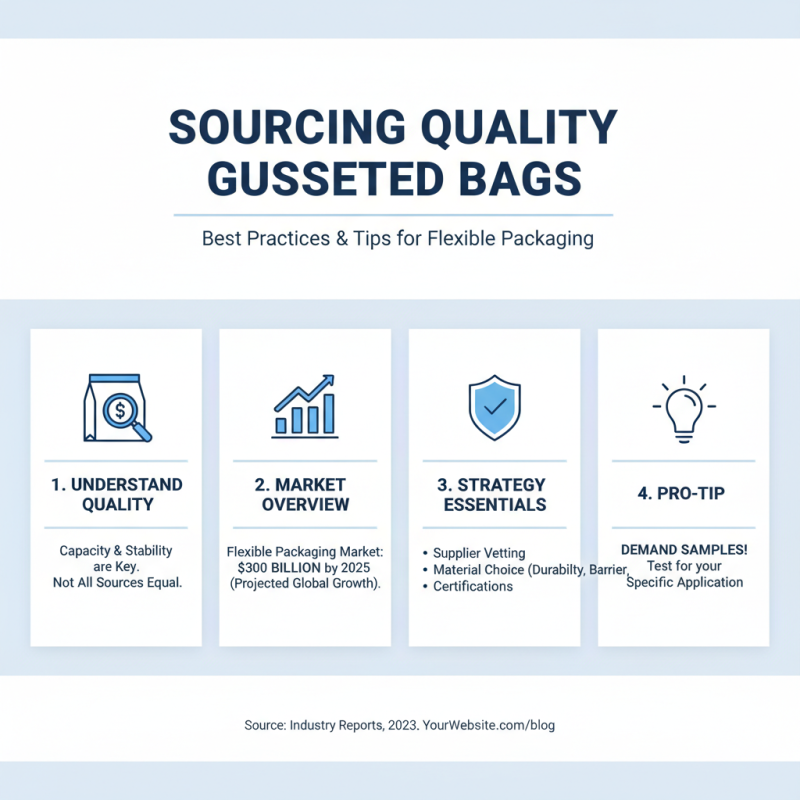
When sourcing gusseted bags, understanding quality is essential. Gusseted bags provide extra capacity and stability. According to recent industry reports, the global flexible packaging market is projected to reach $300 billion by 2025. However, not all sources meet the quality demands of diverse applications.
Choosing the right suppliers can be a challenge. Transparency in manufacturing practices is vital. Ensure vendors follow sustainable processes and adhere to quality certifications. Over 70% of sourcing issues stem from inadequate supplier vetting. Relying on comprehensive reviews can help pinpoint trusted manufacturers.
Cost is another factor. While lower prices may seem attractive, they often sacrifice quality. A study showed that 56% of buyers regretted prioritizing cost over quality in their sourcing decisions. Consider total cost of ownership, which encompasses quality, durability, and performance over time. Balancing cost with quality is crucial for efficient sourcing strategies.