
FAQjuan

Top Large Shipping Bags Manufacturers in China?

Choosing reliable Large Shipping Bags manufacturers in China requires more than comparing prices or browsing polished product photos. These bags may carry textiles, machine parts, agricultural products, or retail goods. Their performance depends on fabric strength, stitching quality, lifting design, moisture resistance, and accurate dimensions. A weak seam can fail during warehouse handling. That detail matters.

This guide examines leading Chinese manufacturers through practical sourcing criteria. It considers production experience, material options, quality-control procedures, customization ability, export communication, and documented testing. Buyers should review woven polypropylene specifications, safe working load ratings, lamination methods, and stitching patterns. Factory audits and sample inspections can reveal problems that catalogs hide. Certifications may support trust, but they should be verified with the issuing organization.

No ranking is permanent.

Market conditions change. Some manufacturers excel at high-volume orders, while others serve smaller customized projects more carefully. A supplier with modern equipment may still struggle with communication or consistency. My assessment therefore avoids relying on one impressive factory visit or one low quotation. It looks at evidence, including sample performance, inspection records, lead-time accuracy, and customer feedback. These points help importers reduce avoidable risks and choose partners suited to their cargo, handling systems, and delivery schedules. The discussion also recognizes an uncomfortable truth: public information is sometimes incomplete, and independent verification remains necessary. A careful buyer should ask clear questions, test actual samples, and document every agreed specification before placing an order.

Top Large Shipping Bags Manufacturers in China?

What Are Large Shipping Bags and How Are They Used?

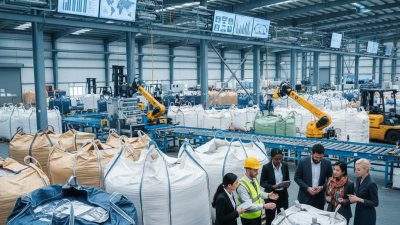
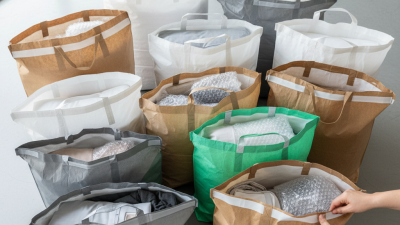
Large shipping bags are flexible containers designed to move bulky, lightweight, or irregular goods safely. They are commonly made from woven polypropylene, heavy-duty plastic, or coated fabric. Their capacity may range from several dozen liters to more than one cubic meter.

These bags help warehouses pack textiles, agricultural materials, construction supplies, and recycling materials. Forklift loops allow mechanical lifting, while stitched seams support repeated handling. However, bag strength depends on fabric weight, stitching quality, moisture exposure, and load balance. A bag may look strong but still fail at a weak corner. That detail is easy to overlook.

Tips: Match the bag to the product’s weight, shape, and storage conditions. Check the safe working load before filling it. Keep sharp edges covered, and avoid dragging full bags across rough floors. Store empty bags away from sunlight and standing water. Clear labels also reduce loading mistakes. This sounds basic. It still matters.

Manufacturers in China often provide custom sizes, printing, liners, closures, and lifting designs. Buyers should request test reports, production samples, and clear inspection standards before placing large orders. A sample can reveal poor stitching or awkward lifting loops. I would not judge quality from appearance alone. Practical testing remains more reliable.

How to Evaluate Large Shipping Bag Manufacturers in China

Top Large Shipping Bags Manufacturers in China?

How to Evaluate Large Shipping Bag Manufacturers in China

Large shipping bags must survive lifting, stacking, moisture, and repeated warehouse handling. Evaluating a Chinese manufacturer requires more than comparing online prices. Ask for material specifications, production capacity, and inspection records before discussing long-term supply.

Check the fabric type, thickness, stitching pattern, seam strength, and safe working load. A reliable factory should explain how these figures are measured. Request a pre-production sample with your actual dimensions and filling conditions. Test it with realistic loads, pallet movement, and storage time. Small details matter. Inspect the lifting loops, discharge spout, liner fit, and printing accuracy. One overlooked seam can create an expensive failure.

Factory evidence is equally important. Review quality procedures, batch traceability, worker training, and equipment maintenance. Independent test reports can support claims, but verify their dates and sample references. If possible, arrange a video audit or an in-person visit. Ask how rejected bags are separated and recorded. I have found that polished samples sometimes hide inconsistent production. That should invite more questions, not immediate trust. Delivery promises also need proof through capacity plans, export experience, and contingency arrangements. A clear contract should define tolerances, packaging, inspection rights, and remedies for defects. Even experienced buyers can specify too much too late; revisiting the specification before mass production is often worthwhile.

How to Evaluate Large Shipping Bag Manufacturers in China

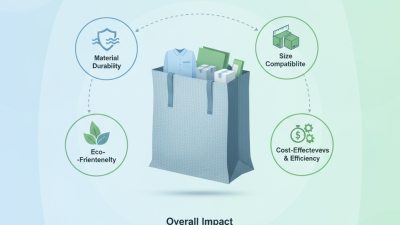
This buyer-side evaluation model prioritizes compliance, safe working load, material performance, and quality traceability. Request documented evidence such as ISO 21898 compliance, test reports, production samples, inspection records, and batch traceability before placing an order. The percentages represent recommended evaluation weights, not market share or company rankings.

Key Production Standards and Quality Control Practices

Top Large Shipping Bags Manufacturers in China: Key Production Standards and Quality Control Practices

Reliable large shipping bags begin with controlled polypropylene materials, not attractive samples. Experienced manufacturers verify resin grades, fabric weight, coating thickness, and color consistency before weaving. Production should follow applicable FIBC standards, including ISO 21898 where relevant. Buyers should also confirm destination-specific packaging requirements.

Quality teams usually inspect fabric strength, seam integrity, lifting loops, and discharge spouts. They measure safe working load and safety factors for the intended cargo. Drop tests reveal weak corners. Compression tests show whether stacked bags can withstand warehouse pressure. UV resistance testing matters when bags remain outdoors. Every batch should carry traceable records, including raw material lots, machine settings, inspection results, and packing dates.

Small details matter. A loose thread can become a torn seam. Moisture inside a bag can damage sensitive goods. Skilled inspectors check random samples, while stricter projects may require full visual inspection. However, testing is not perfect. A passing laboratory sample cannot represent every production condition. Factory teams should review failed tests honestly and adjust weaving tension, stitching density, or handling procedures. Buyers can request test reports, pre-shipment photos, and samples from current production. Clear communication reduces mistakes, although it cannot replace independent verification.

Leading Types of Chinese Large Shipping Bag Suppliers

China’s large shipping bag suppliers usually fall into three practical groups. Integrated manufacturers weave polypropylene fabric, sew bags, and install liners in one facility. They suit buyers needing stable specifications and repeat production. Their typical products include FIBC bulk bags, four-panel bags, U-panel bags, and circular woven bags.

Specialized converters focus on customization. They can add discharge spouts, filling inlets, coated fabric, baffles, or food-grade inner liners. This type is useful when cargo requires controlled moisture, improved stacking, or cleaner handling. Ask for fabric weight, safe working load, safety factor, and seam construction. Details matter.

Export-oriented suppliers provide sourcing support and logistics coordination. Some own production lines, while others use partner factories. Their communication may be smoother, but factory transparency can vary. Request recent production photos, material test reports, sample approval, and an inspection plan before payment. A sample can reveal loose stitching or uneven loops. It is not perfect evidence, though. Production consistency still needs checking. Suppliers serving agriculture, construction, chemicals, and food-related industries may also differ in hygiene controls and documentation. Compare more than price. Evaluate response speed, traceability, packaging protection, and after-sales handling. Low-cost bags can become expensive after damaged cargo, delayed loading, or rejected inspections.

Top Large Shipping Bags Manufacturers in China? - Leading Types of Chinese Large Shipping Bag Suppliers

Supplier Type Common Bag Construction Typical Materials Typical Capacity Typical Safe Working Load Suitable Cargo Common Customization Options Relevant Standards or Requirements
Standard FIBC Supplier U-panel or four-panel bulk bag with four corner lifting loops Woven polypropylene fabric, polypropylene webbing, polyethylene liner when required Approximately 500–2,000 liters Approximately 500–2,000 kg, depending on design and test rating Powders, granules, pellets, minerals, agricultural products Dimensions, inlet, discharge spout, sift-proof seams, coating, liner, printing Safe Working Load specification, safety factor, load testing, export packaging requirements
Circular-Woven Bag Supplier Circular body with reduced side seams and integrated lifting loops Circular-woven polypropylene fabric, laminated or unlaminated Approximately 500–1,500 liters Approximately 500–1,500 kg Fine powders, chemicals, food ingredients, plastic resins Top and bottom designs, liner type, fabric coating, anti-static options, dimensions Food-contact or chemical-handling requirements may apply according to cargo
Food-Grade Bulk Bag Supplier Clean-room compatible FIBC with sealed seams and protective inner liner Food-contact polypropylene fabric, polyethylene or polypropylene liner Approximately 500–1,500 liters Approximately 500–1,500 kg Flour, starch, sugar, grains, feed ingredients, food additives Food-grade liner, hygienic production, tamper-evident closure, batch traceability Applicable food-contact regulations, hygiene controls, migration testing, customer audit requirements
UN-Certified Bag Supplier Tested FIBC design with specified lifting, seam, drop and stacking performance Coated or uncoated woven polypropylene with optional liner Approximately 500–1,500 liters Defined by the approved design and certification documentation Certain hazardous materials and regulated powders or granules Liner, closure system, filling and discharge design, marking, test documentation UN recommendations and applicable dangerous-goods packaging requirements; certification must match the cargo
Anti-Static Bag Supplier Type B, Type C or Type D electrostatic-control FIBC Conductive or dissipative polypropylene fabric, conductive yarns, optional liner Approximately 500–2,000 liters Approximately 500–2,000 kg Combustible powders, chemical powders, plastic powders and sensitive materials Grounding tabs, conductive threads, surface resistance control, specialized liners IEC 61340-4-4 testing categories and site-specific static-control procedures
Laminated Moisture-Resistant Bag Supplier Coated woven fabric with flap, spout or liner-based closure Polypropylene fabric laminated with polypropylene or polyethylene coating Approximately 500–2,000 liters Approximately 500–2,000 kg Cement, fertilizer, minerals, powders and moisture-sensitive granules Lamination level, UV stabilizer, inner liner, coated seams, filling and discharge spouts Moisture barrier performance, UV exposure requirements, cargo compatibility and transport conditions
Heavy-Duty Mining and Construction Bag Supplier Reinforced four-panel or circular FIBC with heavy-duty lifting components High-strength woven polypropylene, reinforced webbing and optional liner Approximately 750–2,000 liters Approximately 1,000–2,000 kg Sand, stone, aggregates, industrial minerals and construction powders Reinforced seams, abrasion-resistant fabric, UV protection, discharge spout, pallet compatibility Load testing, handling equipment compatibility, stacking conditions and outdoor storage requirements
Ventilated Agricultural Bag Supplier Ventilated woven body or breathable panel construction Breathable polypropylene fabric, webbing and optional inner liner Approximately 500–1,500 liters Approximately 500–1,500 kg Potatoes, onions, grains, seeds, wood pellets and other agricultural materials Ventilation ratio, mesh panels, liner, top closure, loop arrangement and dimensions Cargo-specific ventilation, moisture management, pest-control and food-contact requirements
Note: Capacity and Safe Working Load ranges are typical industry specifications. The final design should be confirmed through product testing, cargo density, filling method, lifting equipment, stacking conditions and applicable transport regulations.

How to Choose the Right Manufacturer for Your Business

Choosing a large shipping bag manufacturer in China requires more than comparing prices. I have found that material testing, stitching quality, and communication often decide the final result. Ask whether the factory uses woven polypropylene, heavy-duty polyethylene, or another suitable material for your cargo. Request samples with your actual products inside. A bag that looks strong may still fail at the lifting loops.

Tips: Check production experience, export records, factory capacity, and quality-control procedures. Ask for test reports, weight limits, dimensions, and closure options. Confirm whether the manufacturer can maintain consistent sizes across large orders. Small details matter. Also inspect how the factory handles rejected materials and customer complaints. A reliable supplier should answer clearly, not simply promise “best quality.”

Pricing deserves careful review. Compare material thickness, printing, packaging, inspection, and shipping terms together. The cheapest quotation may exclude important protections. Discuss lead times during busy seasons, because delays can disrupt warehouse planning. I would also request a written sample approval before mass production. This step feels slow, but it prevents expensive misunderstandings. No supplier is perfect, and I once underestimated the effect of humidity on stored bags. Ask how products are protected during storage and transport. Choose a manufacturer that documents changes and accepts reasonable quality checks.