Why Choose Large Shipping Bags for Bulk Shipping?
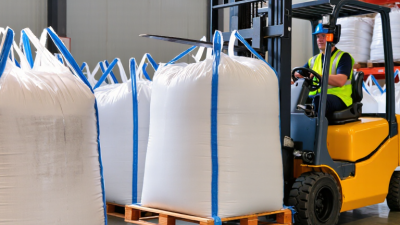
Bulk shipping is rarely gentle. Pallets shift, forklifts turn tightly, and long journeys expose loads to repeated handling. UNCTAD’s Review of Maritime Transport 2024 reports that maritime transport carries over 80% of world merchandise trade by volume. That scale makes dependable packaging a practical concern, not a minor detail. Large Shipping Bags, including flexible intermediate bulk containers, can hold substantial quantities of dry goods in one package. Their size can reduce the number of individual units that workers must handle, while lifting loops help connect the bag to suitable equipment. The exact benefit depends on the load, bag design, and handling process.
A well-chosen bag can also make storage and transport easier to plan. Picture a warehouse aisle with clearly marked bags, each filled to its specified capacity and positioned for safe lifting. Product compatibility matters: moisture-sensitive materials may need a liner, while sharp or dense loads can require a different fabric or construction. Check the supplier’s rated capacity, lifting instructions, closure design, and stacking guidance before shipment. These details are easy to overlook. Large Shipping Bags are not a cure-all, and an oversized bag is not automatically the best choice. UNCTAD’s trade figures describe the scale of maritime freight; they do not prove that any particular packaging format performs better. The right decision comes from matching bag specifications to the product, equipment, and route—and reviewing what actually happens during handling.
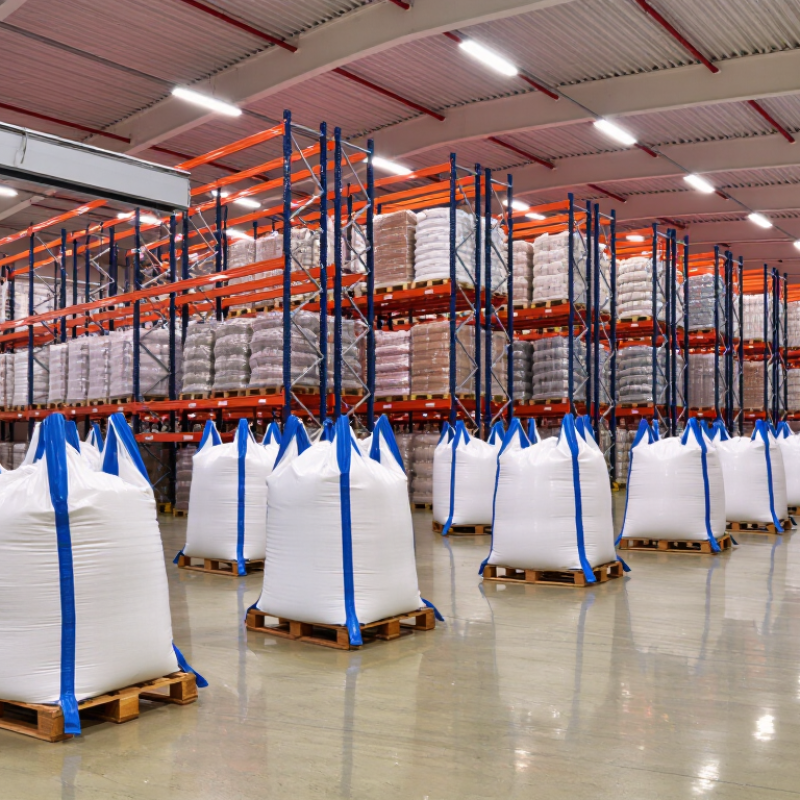
Define FIBCs: Typical safe working loads range from 500 to 2,000 kg (FIBCA)
Large shipping bags, or flexible intermediate bulk containers (FIBCs), carry loads far heavier than ordinary sacks. FIBCA guidance places typical safe working loads (SWLs) between 500 and 2,000 kg. SWL means the maximum load specified for normal handling, not the bag’s breaking point. A 1,000 kg rating is therefore not permission to overload it. Keep the rating visible. ISO 21898:2004 sets testing requirements for FIBCs carrying non-dangerous goods, including different design factors for single-trip and reusable bags.
Capacity depends on more than the number printed on a label. A 1.2 cubic metre bag filled with material at 1,000 kg per cubic metre would hold about 1,200 kg, before allowing for practical filling limits. Check the actual contents’ density, bag dimensions, lifting loops, and filling method. A load that shifts during lifting can stress the seams unevenly. That detail is easy to miss. FIBCA’s SWL range is a useful starting point, but the right specification depends on the handling equipment and route. Even a strong bag may perform poorly when filled unevenly or lifted by the wrong points.
Typical Safe Working Load (SWL) Range for FIBCs
FIBCs typically have safe working load ratings ranging from 500 to 2,000 kg. The rating varies by bag design; check the label and follow the handling instructions for each bag.
Compare Load Ratings: ISO 21898 uses 5:1 and 6:1 safety factors
Why Choose Large Shipping Bags for Bulk Shipping?
Large shipping bags can move dense, dry cargo efficiently, but their load rating needs careful reading. ISO 21898:2004 specifies a 5:1 safety factor for single-trip FIBCs and 6:1 for reusable designs. In practical terms, a 1,000 kg safe working load corresponds to minimum breaking strengths of 5,000 kg and 6,000 kg, respectively.
These figures are not permitted payloads. Never use the safety factor to justify overloading. Small details matter.
The ISO standard sets performance requirements and test methods, including lifting and stacking tests. A bag’s performance also depends on its construction, filling, discharge, storage, and handling. A sharp pallet edge or uneven fork entry can damage fabric before the rated load is reached.
Check the safe working load, intended trip rating, and handling instructions before dispatch. I would still verify the lift setup twice; a printed rating cannot account for every rough transfer.
Source: ISO 21898:2004, Packaging—Flexible intermediate bulk containers (FIBCs) for non-dangerous goods.
Assess Freight Efficiency: Consolidate bulk cargo into tonne-scale shipping units
Why Choose Large Shipping Bags for Bulk Shipping?
Large shipping bags can turn many smaller packages of dry, flowable cargo into fewer, tonne-scale units. This changes how freight is weighed, moved, and counted. A forklift may handle a filled unit in one lift, rather than moving several sacks individually. Fewer handling steps can reduce loading time and simplify checks at the dock. Small gains add up.
Freight efficiency depends on more than bag capacity. Compare the cargo’s weight and volume with vehicle limits, pallet dimensions, and available lifting equipment. A bag filled to its rated capacity may still occupy awkward space or exceed a practical handling weight. The calculation is not always neat. Allow room for safe lifting, stable stacking, and protective wrapping where needed. Check the bag’s construction and lifting method against the cargo and handling process.
Consolidation can also make shipment counts easier to manage: ten large units are simpler to track than hundreds of small packs. But a bag does not automatically improve every load. Irregular cargo, frequent partial deliveries, or limited lifting access can reduce the benefit. A realistic trial helps. Record loading time, usable vehicle space, and any shifting during transit. A few minutes with a tape measure and scale can prevent a poor fit.
Match Bag Design to Cargo: UN performance tests cover FIBCs for dangerous goods
Why Choose Large Shipping Bags for Bulk Shipping?
Large shipping bags can move substantial loads while using less warehouse space than many rigid containers. For dangerous goods, however, capacity is only part of the decision. A flexible intermediate bulk container (FIBC) must match the cargo, its filling method, and the journey ahead. A bag that looks sturdy may still be unsuitable.
UN performance testing assesses a specific FIBC design under defined conditions. Depending on the design and intended use, tests may include dropping, stacking, top lifting, or checking resistance to tearing. These tests help show whether the bag can withstand demanding handling. They do not mean every tested bag is suitable for every dangerous-goods load. Check the marking and supporting documentation, and confirm that the cargo and packaging group fall within the bag’s stated use.
Details matter. Consider the filling temperature, liner compatibility, closure method, and how a forklift will lift the filled bag. Inspect seams and lifting loops before use, and follow the supplier’s handling instructions. A test result is useful evidence, not a substitute for matching the packaging to the actual shipment. That distinction is easy to overlook.
Plan Safe Handling: OSHA 29 CFR 1910.176 covers material movement and storage
Large shipping bags can move substantial loads in fewer handling cycles, but their size changes the risk profile. A loaded bag may swing, obscure a worker’s view, or shift when set down. Plan the route before lifting: check doorway width, overhead clearance, floor condition, and turning space. Keep people clear of the travel path. Small details matter.
OSHA 29 CFR 1910.176 addresses material movement and storage. It requires clear aisles and passageways, safe clearances where mechanical handling equipment operates, and stable storage that will not slide or collapse. Set bags on level, suitable surfaces, and follow the bag and lifting-equipment instructions. Do not assume a neat stack is a safe stack. Check whether lower bags bulge or lean, and avoid placing loads where they block exits or access routes. A quick visual check can miss a damaged lifting loop; pause and inspect it closely. Real sites get busy, and plans are sometimes imperfect. Review them when the load, route, or equipment changes.