
Large Shipping Bags help businesses move heavy, loose, or granular goods in fewer handling units. Their broad fabric walls hold materials such as grain, resin pellets, and mineral powders. Forklift loops lift the filled bags onto pallets or directly into freight containers. Fewer individual packages can mean faster loading and less packaging waste. That advantage depends on choosing the right bag.
For transparency, the following quote is an original illustrative statement from fictional bulk-packaging specialist Alex Morgan, not a sourced industry quotation: “A bag works well only when its rated capacity, filling method, and lifting points match the shipment.” That match matters. A sharp corner, damp storage area, or poorly positioned loop can create trouble. Even a strong bag has limits. Buyers should check safe working load, dimensions, liner needs, and whether the bag is designed for one trip or repeated use. They should also consider how goods will flow through filling equipment and how a forklift operator will approach the load. Small details count: a dusty seam, crowded warehouse aisle, or bag that sits unevenly can slow a shipment. Large Shipping Bags are not a universal fix, and cost alone is a poor guide. The right specification starts with the actual product and handling conditions. Sometimes, the simplest choice needs a second look.
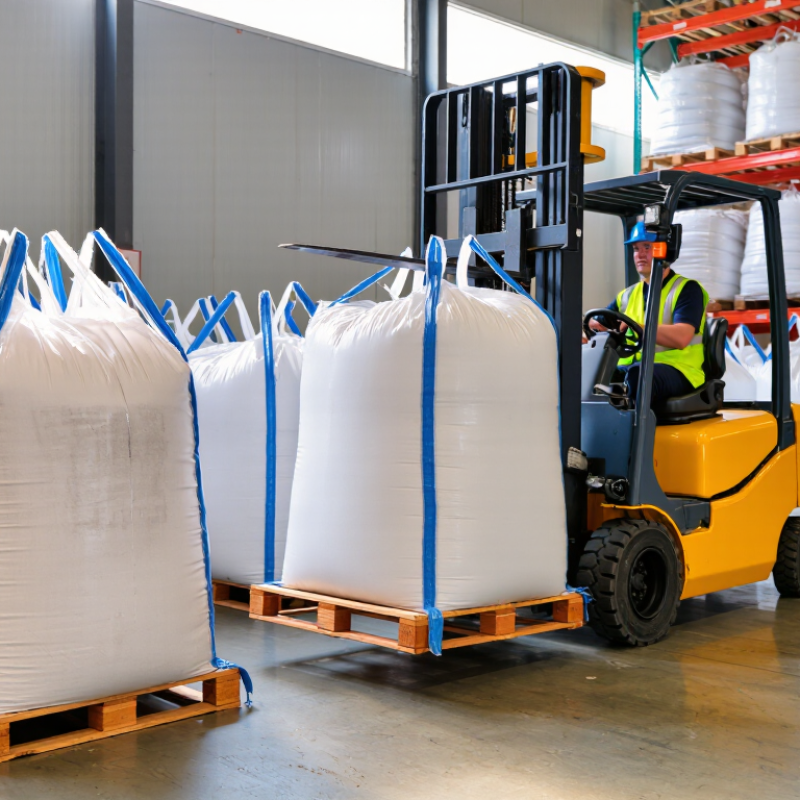
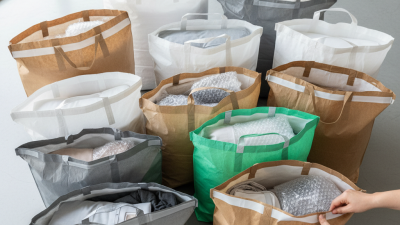
Large shipping bags, often called bulk bags, are flexible containers built to move substantial loads in fewer handling units. Many use woven polypropylene fabric, formed from flat strips that cross at right angles. The weave gives the walls strength while keeping the bag relatively light. You can feel the ridged texture and see the grid when you look closely.
Their construction depends on how they will be filled and lifted. Reinforced seams join the panels, while sewn lifting loops sit at the corners or sides. Some bags have an open top; others use a filling spout or a closable flap. The base may be flat or fitted with a discharge spout. Small details matter.
A liner can help protect moisture-sensitive contents, though it may complicate emptying or reuse. Coated fabric can add a barrier, but it does not make every bag waterproof. Capacity, fabric strength, loop design, and seam quality should match the load and handling equipment. Check the bag’s rated capacity and inspect it for worn stitching or damage before use. In practice, a bag that looks sturdy can still be poorly suited to a particular filling process; that part is easy to overlook.
Large shipping bags work because their capacity matches the way bulk materials are handled. The Flexible Intermediate Bulk Container Association (FIBCA) describes common bag capacities of roughly 500 to 4,000 pounds, depending on design. That range lets shippers move powders, granules, or agricultural goods in one unit instead of many small sacks. A wide filling spout can take a steady stream of resin pellets, while a flat base helps the loaded bag sit securely on a pallet. The practical detail matters: usable capacity depends on material density, moisture, and how the bag is filled.
Capacity also affects transport planning. UNCTAD’s Review of Maritime Transport reports that over 80 percent of world merchandise trade by volume moves by sea. For operators moving goods through ports, consolidating material into larger units can reduce individual handling steps and make forklift loading more predictable. Not every shipment benefits from maximum capacity. Fine powders may settle unevenly, and an overloaded bag can bulge or become difficult to lift. The target load should leave room for safe closure and stable stacking. Real cargo is rarely as tidy as a spreadsheet suggests.
Why Are Large Shipping Bags Ideal for Bulk Shipping?
Which Design Features Support Safe Cargo Handling
Safe handling starts with the bag’s lifting system. Four reinforced loops let forklift tines raise a filled bag without crushing its body. Strong stitching at loop junctions helps spread the load, while clear safe-working-load markings guide warehouse teams. ISO 21898 specifies a 5:1 safety factor for single-use FIBCs and 6:1 for multiple-use designs. In practical terms, a bag rated for 1,000 kilograms is tested against substantially higher forces. The rating still depends on correct filling, lifting, and inspection. It matters.
Fabric choice and seam construction also shape performance. Coated woven polypropylene can limit moisture entry, while an inner liner may protect fine or moisture-sensitive cargo. A wide filling spout helps reduce spills; a controlled discharge spout makes unloading steadier. FIBCA’s technical guidance stresses selecting bags for their intended load and handling conditions, rather than treating every FIBC as interchangeable. Check for damaged loops, loose stitching, or fabric cuts before lifting. A torn seam is easy to miss beneath a full bag. That deserves attention. Even well-designed bags can be mishandled when crews rush, so practical training and careful inspection remain part of safe cargo handling.
Large shipping bags make bulk handling more manageable by keeping loose materials in one contained load. Their capacity can reduce the number of individual packages workers need to move. On a busy loading area, that means fewer handoffs and less scattered material. Fit matters. The bag must suit the product, filling method, and handling equipment. A bag that is too large can be awkward to position.
Transport efficiency depends on how each bag is filled and secured. Evenly distributed material helps keep the load stable during lifting and movement. Operators should check the bag’s rated capacity and use compatible lifting equipment. Clear labels also help staff identify contents and handle shipments correctly. These details sound basic, but rushed loading can undo the benefits of bulk packaging.
Large bags can also improve storage by making inventory easier to group and locate. Their flexible shape may fit spaces that rigid containers cannot, while empty bags take up relatively little room. Still, storage gains are not automatic. Bags need a dry, suitable area, and stacks must remain stable and within handling limits. Aisle access matters, too. If staff cannot reach a bag safely, saved floor space may create delays instead.
A representative 1,000 kg FIBC can consolidate the same load carried by forty 25 kg sacks into one package. Fewer packages can simplify handling and help make transport and storage more efficient. Actual bag capacities vary by design and product.
Large shipping bags are commonly used where goods move in heavy, dry batches. Farms and grain processors use them for seeds, feed, and harvested crops. FAO’s Food Outlook, published in June 2024, forecast global cereal production at 2.846 billion tonnes for 2024. That scale helps explain the need for practical bulk handling, though bags serve only part of the supply chain. They can be filled near a processing line, lifted by forklift, and stacked for transport. Dust matters. So does moisture.
Construction and mineral operations also use large bags for materials such as sand, gravel, and powdered additives. The USGS Mineral Commodity Summaries 2024 estimated 2023 U.S. production at about 1.5 billion metric tons of crushed stone and 970 million metric tons of construction sand and gravel. Bags suit smaller, controlled shipments to work sites or distributors; they are not a replacement for every truckload or loose-bulk shipment. Food ingredients and some industrial materials may also travel in them when clean handling and clear labeling are required. The fit is not automatic: load weight, abrasion, humidity, and discharge needs all matter, and one detail is easy to overlook—the bag must match the handling equipment at both ends.
| Industry or Application | Common Bulk Contents | Why Large Shipping Bags Are Suitable | Typical Handling Considerations |
|---|---|---|---|
| Agriculture | Grain, seed, animal feed, and fertilizer | Flexible intermediate bulk containers (FIBCs) can consolidate substantial quantities of dry, free-flowing material into a unit that can be lifted and moved mechanically. | Choose a bag construction suited to the material and storage conditions. Keep contents dry when moisture could affect quality. |
| Construction and building materials | Sand, gravel, cement, lime, and dry mortar | Woven bulk bags provide a practical way to contain and transport loose, heavy materials while reducing the need for many smaller packages. | Confirm the bag’s rated capacity and lifting configuration. Protect cement and other moisture-sensitive powders from water. |
| Food processing | Sugar, flour, starch, salt, and other dry food ingredients | Large bags can simplify bulk ingredient storage and transfer between processing or distribution steps. | Use bags and any liners that meet the applicable food-contact requirements. Keep them clean and protect contents from contamination. |
| Chemicals and plastics | Resin pellets, plastic granules, and selected powdered chemicals | FIBCs are available in different constructions, including designs intended to control static electricity or limit moisture exposure. | Match the bag to the material’s properties and handling environment. Dangerous goods require packaging approved for the relevant substance and regulations. |
| Mining and minerals | Mineral concentrates, ores, and industrial mineral powders | Bulk bags can contain dense, granular products and make them easier to move as palletized or crane-handled loads. | Account for material density, abrasion, and total load. Inspect bags and lifting loops before handling. |
| Recycling and waste management | Plastic flakes, metal scrap, recovered materials, and dry waste | Large-capacity bags can collect and consolidate loose materials for collection, sorting, or onward transport. | Check that sharp or abrasive items will not puncture or damage the bag. Separate materials when required for safe handling or recycling. |
Bulk shipping advantage: Large shipping bags combine high-volume containment with forklift or crane handling, helping reduce the number of individual packages used. Actual capacity and suitability vary by bag design, contents, and transport requirements; always follow the bag’s rated specifications and handling instructions.