China Top 10 Shipping Packaging Manufacturers in 2026
China’s shipping packaging industry is entering 2026 with stronger demands for protection, traceability, and responsible material use. This guide introduces the China Top 10 Shipping Packaging Manufacturers in 2026. It focuses on companies serving export, e-commerce, industrial, and logistics customers.
The selection considers production capacity, material quality, customization, testing procedures, delivery performance, and customer support. It also reviews practical details, such as carton compression strength, moisture resistance, pallet stability, and protective inserts. Certifications and factory information matter, but they should support real evidence. A certificate alone is not enough. Buyers should request samples, inspection records, and recent project references before signing contracts.
These manufacturers may offer corrugated cartons, wooden cases, honeycomb boards, edge protectors, stretch films, and other Shipping Packaging solutions. Their capabilities can differ widely. One supplier may provide excellent structural design, while another may deliver better prices or faster regional fulfillment. That difference matters.
The ranking is not permanent. Market conditions change quickly. Public information can also be incomplete or outdated. Some suppliers present impressive catalogs but provide limited technical documentation. This guide therefore encourages careful comparison rather than blind acceptance. Readers should verify material specifications, sustainability claims, lead times, and export experience directly. A factory visit or independent quality inspection can reveal details that online profiles miss. Small details often decide whether goods arrive safely.
Definition and Scope of Shipping Packaging Manufacturing in China
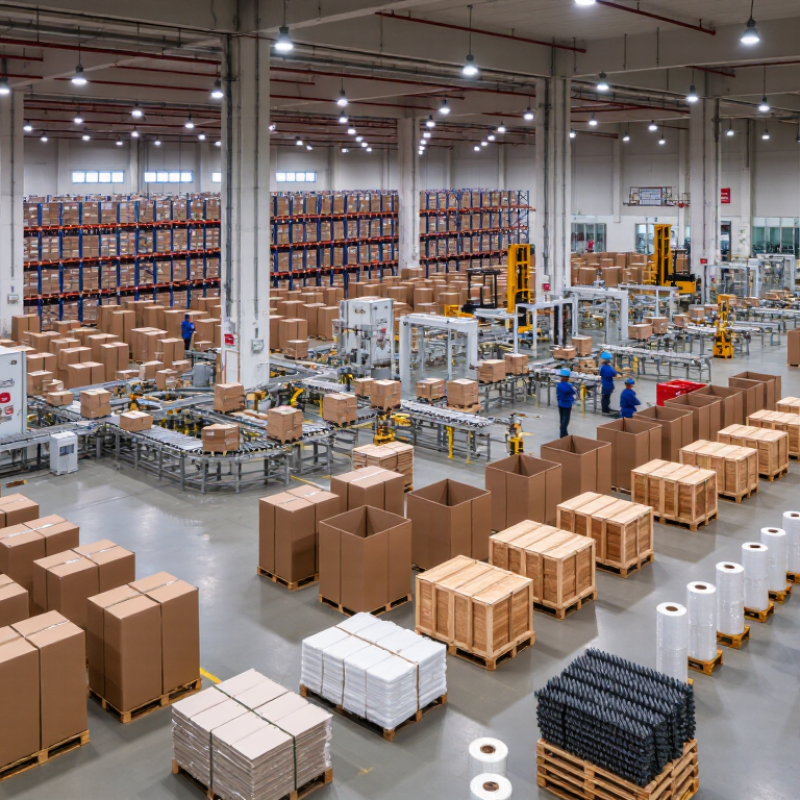
China’s shipping packaging manufacturing covers more than carton production. It includes material selection, structural design, converting, cushioning, sealing, labeling, testing, and export preparation. Typical products include corrugated boxes, wooden cases, pallets, molded-pulp inserts, protective films, strapping, and moisture barriers. Freight forwarding, warehousing, and ocean transport fall outside this manufacturing scope.
The boundary is not perfectly clean. Some factories produce packaging materials, while others integrate packaging with packing services. A practical supplier audit should check compression strength, drop resistance, moisture protection, load stability, and traceability. UNCTAD’s Review of Maritime Transport 2024 reported global seaborne trade of about 12.3 billion tonnes in 2023. That volume shows why packaging reliability matters beyond appearance. The OECD’s Global Plastics Outlook also identified packaging as responsible for about 40% of global plastic use. Material reduction is therefore a technical issue, not only a marketing claim.
Tips: Define the shipping route first. Measure carton performance in humid and dry conditions. Request test records, material specifications, and batch traceability. China Packaging Federation industry data places China’s packaging sector above RMB 1 trillion in annual operating revenue, but broad figures can hide uneven factory capability. A low quoted price may reflect thinner board, weaker testing, or unclear quality controls. That assumption needs checking.
Evaluation Criteria for Ranking the Top 10 Manufacturers in 2026
Ranking China’s top 10 shipping packaging manufacturers in 2026 requires more than comparing prices. The evaluation should begin with verified production experience and documented customer results. Strong manufacturers should show consistent performance across cartons, pallets, protective inserts, or moisture barriers. Their packaging must withstand stacking, vibration, humidity, and long-distance handling. Laboratory test reports matter, but real shipment feedback matters more. A perfect report cannot replace practical evidence.
Quality systems are another major criterion. Review material traceability, inspection records, sampling methods, and corrective action procedures. Manufacturing capacity should match promised lead times, especially during seasonal demand. Assess customization skills, design support, prototype speed, and communication accuracy. Sustainability also deserves measurable attention, including recycled content, material reduction, and responsible waste control. Certifications can support credibility, but certificates alone should not decide the ranking. No ranking is perfectly objective. Some data may remain incomplete.
Tips: Request recent test records, sample packaging, and a clear quotation. Compare total cost, not only unit price. Check whether the supplier explains failure risks honestly. A dependable manufacturer should discuss weak points before production begins. It should also provide traceable batch information and practical after-sales support. In 2026, the strongest ranking model will balance protection, reliability, compliance, service, innovation, and verified delivery performance. This approach is less dramatic, but more useful for real purchasing decisions.
Product Range, Materials, and Industry Applications
China Top 10 Shipping Packaging Manufacturers in 2026
Product Range, Materials, and Industry Applications
The leading ten Chinese shipping packaging manufacturers are not identical. Their product ranges often include corrugated cartons, heavy-duty crates, pallets, mailers, drums, and protective inserts. Some focus on export cases. Others produce flexible films, woven sacks, or reusable containers. Material choice should follow cargo weight, moisture exposure, stacking pressure, and transport distance. Corrugated fiberboard suits many parcels. Plywood and reinforced timber support machinery. Molded pulp protects smaller components with less plastic. Recycled content can reduce waste, but it may lose strength in humid warehouses. That trade-off deserves testing.
Industry applications reveal practical differences. Electronics suppliers usually need antistatic protection, clean interiors, and tight cushioning. Food and beverage shipments require suitable, traceable materials and careful hygiene controls. Automotive parts may need returnable bins, edge guards, and corrosion protection. Pharmaceutical logistics demands validated temperature control and documented quality procedures. These needs are not interchangeable. A packaging engineer should review drop tests, compression results, moisture resistance, and supplier inspection records. In practice, one specification can still fail when loading changes. That is an uncomfortable lesson.
Tips: Request samples before signing volume orders. Check dimensions after assembly, not only on drawings. Ask for test reports, material certificates, and quality inspection procedures. Also, confirm whether production tolerances match your filling equipment. Small gaps can become expensive problems.
How to Select the Right Chinese Shipping Packaging Manufacturer
Choosing the right Chinese shipping packaging manufacturer requires more than comparing prices. Start with your product’s weight, dimensions, stacking method, and transport route. A reliable manufacturer should explain how its materials fit these conditions. Ask for board grade, cushioning density, moisture resistance, and sealing performance. Request recent test records, not vague promises.
Begin with samples.
Test them under realistic pressure. Place a loaded carton beneath other cartons for several days. Check crushed corners, loose tape, and moisture damage. For fragile products, simulate vibration and short drops on different sides. The best supplier will discuss failures openly and adjust the structure. A perfect sample can mislead. Real shipments are less forgiving.
Review the factory’s production controls, inspection process, and traceability records. Confirm whether the same materials will be used for mass production. Clear communication matters too. Your supplier should provide drawings, tolerances, packing instructions, and a corrective-action process. Ask about minimum order quantities, lead times, spare capacity, and quality responsibility. A factory visit or independent audit adds useful evidence. Do not rely only on certificates; verify their scope and validity. Some buyers overlook humidity during storage, then blame the carton later. That mistake is avoidable. Select a manufacturer that documents changes, reports defects honestly, and treats packaging as a tested logistics system rather than a cheap outer shell.